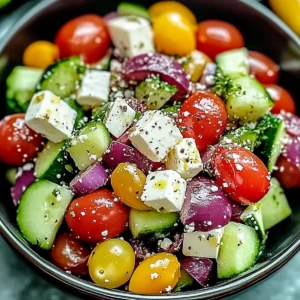
Picture this: a warm summer evening, the sun dipping below the horizon as you gather around the table with friends and family. The vibrant colors of fresh vegetables beckon from a beautiful bowl, promising a burst of flavor with every bite. This is the magic of the best Greek salad recipe, a dish that transforms simple ingredients into a celebration of taste and health.

Jump to:
- Why is this the <strong>Best Greek Salad Recipe</strong>?
- <strong>Best Greek Salad Ingredients</strong>
- How to Make the Best Greek Salad Recipe
- How to Store and Freeze Greek Salad
- Make Ahead Options
- What to Serve with <strong>Greek Salad</strong>?
- <strong>Greek Salad Variations</strong>
- Expert Tips for the Best Greek Salad
- Best Greek Salad Recipe FAQs
After trying countless variations, I’ve landed on a version that pairs the crunch of cucumbers and bell peppers with the tangy richness of feta cheese. The secret? A homemade dressing that elevates this salad to a new level, marrying the zest of lemon and the boldness of garlic. It’s quick to make and perfect for those evenings when you want something light yet satisfying, steering clear of fast food in favor of fresh, homemade goodness.
So, roll up your sleeves and let’s toss together a salad that’s not only a feast for the eyes but also a delight for the palate. You’ll be serving up not just a side dish, but a heartwarming experience!
Why is this the Best Greek Salad Recipe?
Freshness takes center stage: This salad bursts with the vibrant flavors of crunchy cucumbers, sweet grape tomatoes, and zesty bell peppers. Hearty protein from feta cheese adds a creamy texture that will satisfy your cravings. Quick and easy, you can whip this up in just 15 minutes, making it the perfect last-minute dish. Versatile enough to complement any meal, it’s equally delightful as a side or a light main course. Healthful benefits shine through with abundant veggies and olive oil, letting you savor every bite guilt-free!
Best Greek Salad Ingredients
Unlock the freshness of a classic dish with these simple components!
For the Salad
- Large cucumber – diced for that satisfying crunch.
- Grape tomatoes – halved, providing sweetness and vibrant color.
- Green bell pepper – diced, adds a refreshing crunch and flavor.
- Red onion – thinly sliced for a subtle zing and beautiful color.
- Kalamata olives – halved, offering a briny depth that complements the salad.
- Feta cheese – crumbled, a creamy boldness that defines the best Greek salad recipe.
For the Dressing
- Red apple vinegar – tangy and slightly sweet, perfect for a balanced dressing.
- Lemon juice – fresh-squeezed for a zesty brightness.
- Dijon mustard – enhances the dressing with a hint of sharpness.
- Garlic cloves – minced, imparting aromatic flavor that elevates your salad.
- Dried oregano – adds a fragrant herb note; feel free to substitute with fresh if you have it!
- Olive oil – rich and smooth, acting as the dressing’s base.
- Salt and pepper – to taste, essential for bringing all the flavors together.
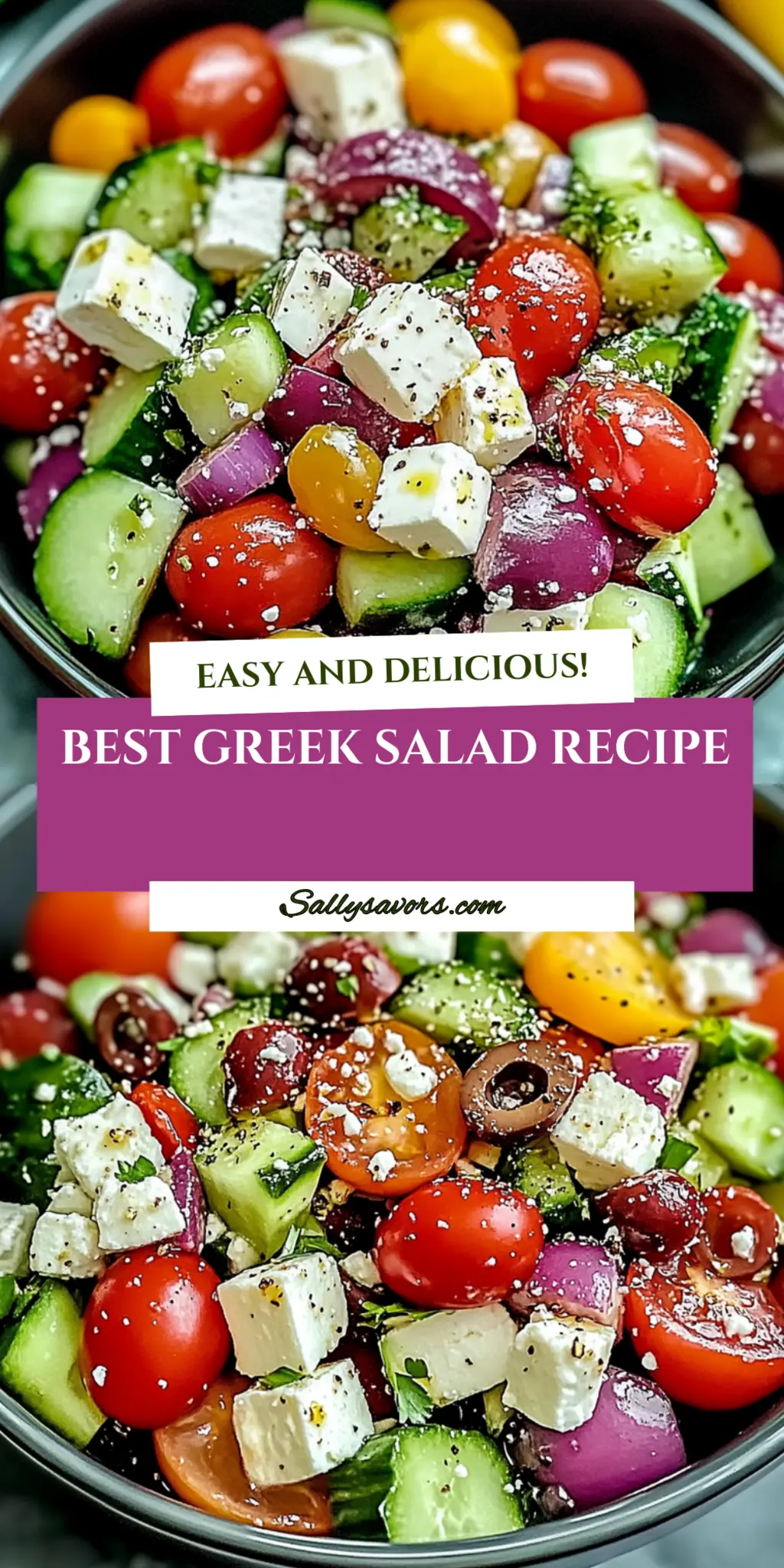
How to Make the Best Greek Salad Recipe
-
Gather all fresh ingredients, ensuring they are clean and ready to go. This sets the stage for your vibrant salad and makes the process seamless.
-
Dice the cucumber, halve the grape tomatoes, dice the green bell pepper, and thinly slice the red onion. Aim for uniform pieces for a balanced bite and visual appeal.
-
Combine the cucumber, tomatoes, bell pepper, onion, Kalamata olives, and crumbled feta cheese in a large mixing bowl. Gently mix these fresh ingredients, letting their colors mingle.
-
Whisk together the red apple vinegar, lemon juice, Dijon mustard, minced garlic, dried oregano, salt, pepper, and olive oil in a separate bowl until you achieve a beautifully emulsified dressing.
-
Drizzle the dressing over the salad ingredients and toss gently to combine all the flavors. Be careful not to break up the feta too much; you want lovely, creamy chunks throughout.
-
Chill the salad in the refrigerator for at least 30 minutes before serving. This allows the flavors to harmonize, creating an unforgettable taste experience.
Optional: Serve with a sprig of fresh parsley for an extra pop of color!
Exact quantities are listed in the recipe card below.
How to Store and Freeze Greek Salad
Fridge: Store leftovers in an airtight container in the refrigerator for up to 3 days. This helps maintain the fresh flavors of the best Greek salad recipe.
Separate Dressing: For optimal freshness, keep the dressing separate until ready to serve. This prevents the salad from becoming soggy and ensures a crisp bite.
Freezer: It’s not recommended to freeze Greek salad, as vegetables can lose their texture upon thawing. Enjoy it fresh for the best experience!
Reheating: If desired, you can gently warm leftover feta and olives, but it’s best to enjoy the salad cold for vibrant flavors.
Make Ahead Options
These meal prep-friendly components of the best Greek salad recipe make it a breeze for busy weeknights! You can prepare all the chopped vegetables—cucumber, tomatoes, bell pepper, and onion—up to 3 days in advance. Simply store them in an airtight container in the refrigerator to maintain freshness. Crumbled feta and Kalamata olives can also be prepped ahead and mixed in just before serving to avoid any sogginess. As for the dressing, prepare it and store it separately in the fridge for up to 5 days. When you’re ready to enjoy your salad, just give everything a quick toss, drizzle on the dressing, and you’ll have a refreshing, vibrant dish with minimum effort!
What to Serve with Greek Salad?
Imagine a sunny day spent outdoors, where the freshness of your meal complements the warmth of the season.
-
Grilled Chicken Skewers: The smoky flavor of grilled chicken pairs perfectly, enhancing the salad’s freshness while adding satisfying protein.
-
Pita Bread: Soft and fluffy, pita bread is perfect for scooping up the salad, transforming each bite into a delightful experience.
-
Tzatziki Sauce: This cool, creamy cucumber-yogurt dip adds a refreshing tang that echoes the crispness of your salad.
-
Stuffed Grape Leaves: These savory bites bring a traditional touch, offering a delightful contrast to the salad’s vibrant textures.
-
Roasted Vegetables: Their warm, caramelized flavors enrich the meal, providing a cozy balance alongside the bright, refreshing Greek salad.
-
Red Wine: A chilled glass of red wine enhances the savory elements of your meal, adding depth and richness to every bite.
-
Lemon Sorbet: To cleanse the palate, a scoop of lemon sorbet offers a sweet, citrusy finish that will leave you feeling refreshed and satisfied.
Greek Salad Variations
Feel free to tailor this recipe to match your tastes or dietary needs, making every serving uniquely yours!
-
Dairy-Free: Substitute feta with crumbled tofu or a dairy-free cheese alternative for a similar texture without the dairy.
-
Spicy Kick: Add sliced jalapeños or crushed red pepper flakes to the dressing for a delightful heat that contrasts beautifully with the salad’s fresh flavors.
-
Chickpea Boost: Toss in a can of drained and rinsed chickpeas for a protein-packed twist that adds heartiness and substance to your Greek salad.
-
Mediterranean Medley: Include artichoke hearts or sun-dried tomatoes to amplify the Mediterranean flair, bringing extra depth and flavor to your dish.
-
Herb Infusion: Swap out dried oregano for fresh herbs like basil or parsley, enhancing the salad with bright, aromatic notes that’ll elevate the overall experience.
-
Rainbow Variety: Mix in colorful ingredients like grated carrots or radishes to create a visually stunning salad that delights the eyes while bursting with nutrition.
-
Quinoa Twist: Serve your Greek salad atop a bed of cooked quinoa for an added layer of texture and a nutty flavor, making it a filling main course.
-
Nut Free: If allergies are a concern, skip the olives and add sunflower seeds for a delightful crunch while keeping the salad light and vibrant.
Expert Tips for the Best Greek Salad
-
Use Fresh Ingredients: Always choose the freshest vegetables and herbs. Wilted produce can make the best Greek salad recipe lack flavor and crunch.
-
Feta Matters: Opt for block feta cheese instead of crumbled. Crumbling it yourself allows you to control the texture and ensures a creamier result.
-
Chill for Flavor: Allow your salad to chill for at least 30 minutes. This step enhances the flavors, making each bite a delightful experience.
-
Tweak the Dressing: Feel free to adjust the lemon juice or vinegar based on your taste preference. A little acidity goes a long way in brightening up the best Greek salad recipe!
-
Avoid Over-Tossing: When combining the salad with dressing, toss gently to keep feta intact. Over-mixing can result in a mushy salad.
Best Greek Salad Recipe FAQs
What type of cucumbers are best for Greek salad?
Absolutely! For the best Greek salad recipe, I recommend using English or Persian cucumbers. These varieties are often crisper, have fewer seeds, and offer a refreshing crunch. If using regular cucumbers, be sure to peel them to avoid a bitter taste.
How long can I store leftovers?
You can store any leftover Greek salad in an airtight container in the refrigerator for up to 3 days. However, for the best taste and crunch, I suggest consuming it within 1 to 2 days. The flavors are at their peak during this timeframe!
Can I freeze Greek salad?
Very! Freezing Greek salad isn’t recommended, as the vegetables—cucumbers, tomatoes, and peppers—lose their fresh texture once thawed. Instead, I recommend enjoying this salad fresh. If you find yourself with loads of ingredients, consider freezing the dressing instead; it can last in the freezer for up to 3 months.
What can I do if my salad is too salty?
If you find that your Greek salad is too salty, don’t worry! Add more fresh vegetables like diced cucumbers or bell peppers to dilute the saltiness. Another trick is to add a squeeze of lemon juice; the acidity can help balance flavors. If you’ve dressed the salad, consider tossing in some undressed greens to absorb excess salt.
Is this Greek salad suitable for those with dairy allergies?
Absolutely! If you want to make the best Greek salad recipe dairy-free, you can skip the feta cheese or substitute it with a non-dairy feta alternative made from nuts. You can also use avocado for creaminess, which complements the other fresh ingredients beautifully.
What if I don’t have red apple vinegar?
No worries! If you don’t have red apple vinegar on hand, you can use red wine vinegar or even balsamic vinegar as substitutes. Each will impart a different flavor profile to your dressing, but they all pair wonderfully with the myriad of vegetable flavors in the salad!
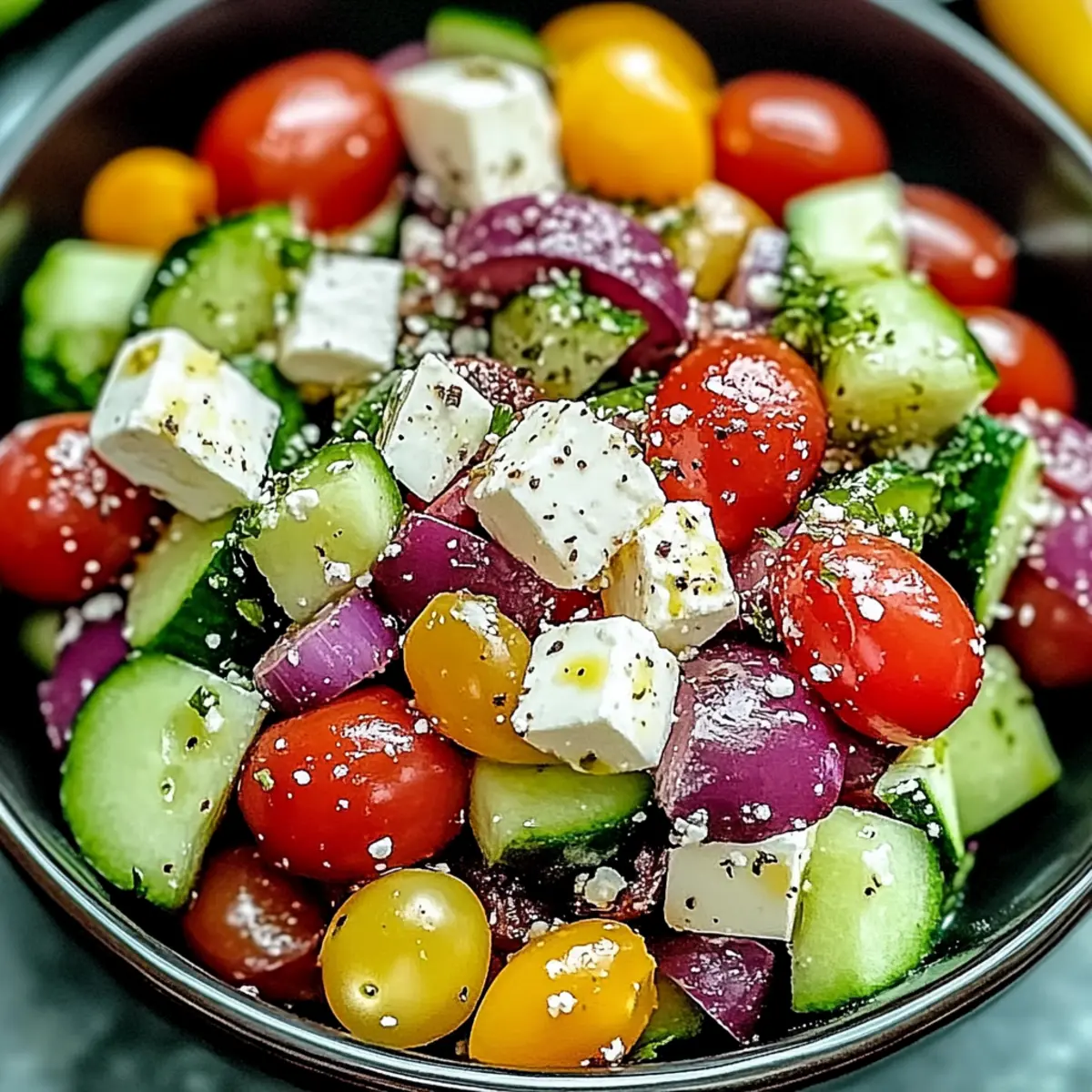
The Best Greek Salad Recipe You'll Make Again and Again
Ingredients
Equipment
Method
- Gather all fresh ingredients, ensuring they are clean and ready to go.
- Dice the cucumber, halve the grape tomatoes, dice the green bell pepper, and thinly slice the red onion.
- Combine the cucumber, tomatoes, bell pepper, onion, Kalamata olives, and crumbled feta cheese in a large mixing bowl.
- Whisk together the red apple vinegar, lemon juice, Dijon mustard, minced garlic, dried oregano, salt, pepper, and olive oil in a separate bowl until emulsified.
- Drizzle the dressing over the salad ingredients and toss gently to combine.
- Chill the salad in the refrigerator for at least 30 minutes before serving.